
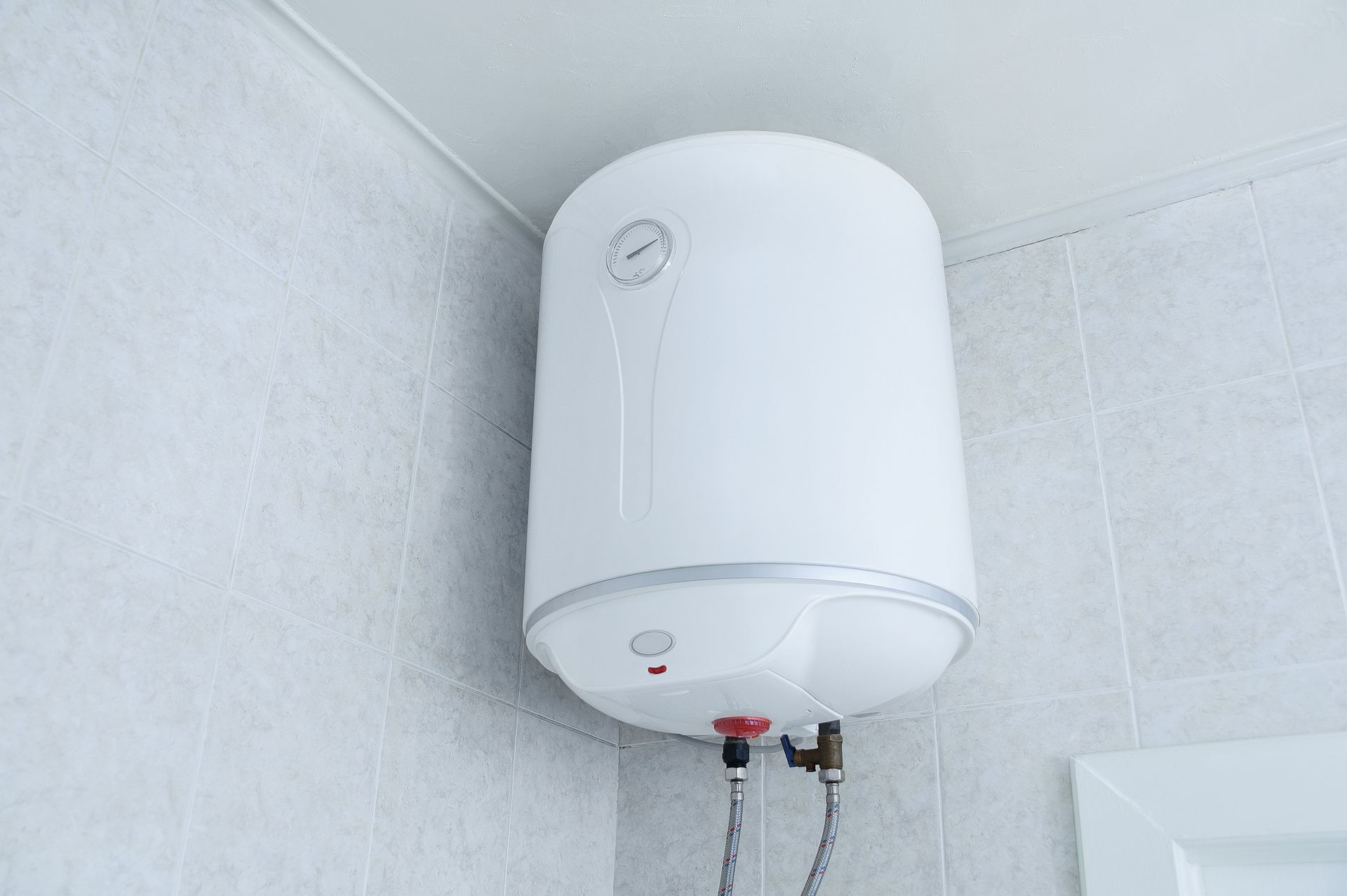
Water Heater Leaking From the Bottom? What That Actually Means
A puddle under your water heater isn’t always the same problem. Sometimes it’s a cheap fix. Sometimes it means the tank is done. Here’s how we tell the difference on a call.
First thing: figure out where the water’s actually coming from
Water runs downhill, so a puddle at the base of the tank tells you almost nothing about where the leak started. It could be a connection two feet up. It could be the tank. It might not be anything serious at all. Before you panic, dry the whole thing off with a towel and watch where the water shows up again.
Run your hand along the cold and hot water lines up top, the temperature and pressure relief valve on the side, and the drain valve near the floor. If the water reappears at one of those spots first, the tank itself is probably fine. If it’s seeping from underneath the tank with everything up top bone dry, that’s a different conversation.
It might just be condensation (and that’s the good news)
A lot of the “leaks” we get called out for in the valley turn out to be condensation, especially in winter. Cold incoming groundwater hits a hot tank, the outside of the tank sweats, and the drops run down to the floor. With well water around here running real cold this time of year, we see it a lot.
The tells: the water is clear, there isn’t much of it, and it tends to show up right after a big hot water draw or first thing on a cold morning. If you turn the thermostat down a touch and the puddle stops, it was sweating, not leaking. Condensation isn’t an emergency. A tank that’s old enough to sweat heavily is worth keeping an eye on, but you don’t need to replace anything today.
A fitting or valve leak is usually a repair
If the water traces back to a connection, you’re in good shape. The cold and hot nipples up top, the drain valve at the bottom, and the T&P relief valve are all serviceable parts. A drain valve that weeps can be snugged or swapped. A union or flex line that’s loosened up over the years gets resealed.
The T&P valve is the one to respect. If it’s dripping, it might just be old and tired, or it might be telling you the tank is running too hot or the pressure in your house is too high. Don’t cap it or plug it. That valve is a safety device, and on an overheating tank it’s the only thing standing between you and a real problem. We figure out why it’s discharging before we touch it.
Loose fittings on an otherwise healthy tank are a straightforward fix. We carry the parts, we’re certified for most major water heater brands, and most of these calls don’t take long.
When it’s the tank itself, the tank is done
Here’s the one nobody wants to hear. If the steel tank has rusted through, there’s no patch, no fitting, no sealant that brings it back. The leak is coming from the bottom seam or the body of the tank, and water is finding its way out through metal that’s given up. That tank gets replaced.
How do you know? The water keeps coming back no matter how dry you wipe it, it’s often rusty or cloudy, and it’s seeping from the base with every connection up top dry. Once a tank starts leaking through the body, it only gets worse, and it can fail all at once. We’ve seen more than a few flooded basements that started as a small puddle somebody was watching for a couple of weeks.
Signs your tank is on the way out
A leak rarely shows up out of nowhere. The tank usually warns you. Rumbling or popping when it heats up is sediment cooked onto the bottom, and it makes the steel run hotter and rust faster. Rusty or metallic-smelling hot water (when the cold runs clear) means the tank is corroding from the inside.
Age matters too. A standard tank water heater is generally good for eight to twelve years. A lot of the housing stock around Front Royal and out through the valley is older, and we run into water heaters well past their prime that nobody’s thought about in a decade. If yours is in that range and it’s making noise or putting rust in your water, start planning before it picks the worst possible morning to quit.
Hard water and well water push that timeline shorter. If you’re on a well, flushing the tank once a year buys you real time.
What we do when we get the call
We come out, find the actual source instead of guessing, and tell you straight whether it’s a repair or a replacement. If the tank’s got years left, we’re not going to talk you into a new one. If it’s rusted through, we’re not going to patch it and bill you twice when it leaks again.
If it’s a fitting, a valve, or a drain, we fix it on the spot when we can. If the tank’s done, we’ll go over your options, sizing, and what fits your house, and get hot water back. Quotes are free, we’re licensed and insured, and we run 24/7 for the calls that can’t wait. Call us at 540-671-5417 and we’ll get a real answer under that tank.
Questions about your own system? Learn more about our Water Heaters, see recent work, or request a free quote. Or call us straight at 540-671-5417. We pick up, we show up, and we tell you straight what is wrong.
Common questions
Is a water heater leaking from the bottom dangerous?
It can be. A slow weep from a fitting is mostly a nuisance, but a tank that’s rusted through can fail suddenly and flood the area around it. If the T&P relief valve is the source, that’s a safety issue worth looking at right away. If you’re not sure, shut the water supply to the heater off and call. Better to check it than wake up to a flooded basement.
Can a leaking water heater be repaired, or does it always need replacing?
It depends entirely on where the leak is. Leaks at the cold and hot connections, the drain valve, or the T&P valve are usually repairable, since those are serviceable parts. If the steel tank itself has corroded through, there’s no fix and it needs replacing. Correctly identifying the source is the first thing we do on a call.
How do I tell the difference between condensation and a real leak?
Dry the whole tank off and watch it. Condensation is clear, light, and shows up right after the tank heats a big draw of cold water, which is common with our cold well water in winter. A real leak keeps coming back at a specific spot, often a fitting or the base. If turning the temperature down a notch stops it, you were dealing with sweat, not a leak.
How long does a water heater last?
A standard tank heater generally runs eight to twelve years. Hard water and well water shorten that, and a lot of the older homes around Front Royal and the valley have heaters well past that range. If yours is over eight years old and rumbling or putting rust in the water, plan for a replacement before it fails on its own schedule.
Why is my water heater making a rumbling or popping noise?
That’s sediment that’s settled and hardened on the bottom of the tank. The burner has to heat through that layer, which makes the steel run hotter and corrode faster, and it’s often an early warning that a leak is coming. Flushing the tank can help if you catch it early. On an older, noisy tank, take it as a sign to start watching it closely.
Are you certified for my brand of water heater?
We’re certified for most major water heater brands, so whatever’s in your house there’s a good chance we work on it. We’re also backflow certified, licensed, and insured. If you tell us the brand and rough age when you call 540-671-5417, we can come out ready with the right parts and a free quote.
Need a plumber in Front Royal, VA?
Family owned, 45 years of combined experience, free quotes and 24/7 emergency service across Front Royal and the Shenandoah Valley.
540-671-5417