
Front Royal, VA · Water Heaters & Boilers · 24/7 Emergency
Boiler RepairWhen the heat quits, we show up
A cold boiler in January is not something to sit on. We diagnose no-heat calls, leaks, and lockouts on gas, oil, and electric boilers across Front Royal and the Shenandoah Valley, and we tell you straight what it needs.
The signs your boiler needs a look
Most boiler failures give you a warning before they go cold for good. The trick is knowing what the warning means.
A boiler is the heart of a hydronic heating system. It heats water and pushes it through baseboard, radiators, or in-floor loops to warm the house. When something in that loop goes wrong, the symptoms are usually loud, wet, or cold, and they tend to show up at the worst time of year. Here is what we get called for most in Front Royal homes.
- No heat at allThe thermostat is calling, the burner is dead, the radiators are stone cold. Could be ignition, a tripped high limit, a failed circulator, or a control board that quit.
- Boiler locks out and resetsIt fires for a minute, then shuts off and throws a fault code, or short-cycles on and off. Usually a flame sensor, low water, blocked condensate, or a pressure problem.
- Water on the floorDrips at the relief valve, the circulator flange, an expansion tank, or a pinhole in old copper. Leaks knock down system pressure and starve the heat.
- Knocking, gurgling, or bangingAir trapped in the loop, a stuck zone valve, or sediment in an older boiler. The noise tells us where to start.
- Pressure too low or too highA healthy residential system sits near 12 to 15 psi cold. A gauge pinned at the bottom, or a relief valve dumping, both point to a fault we need to trace.
- Some rooms warm, others coldOne zone dead while the rest heat fine usually means a failed zone valve, a stuck circulator, or air locked in that loop.
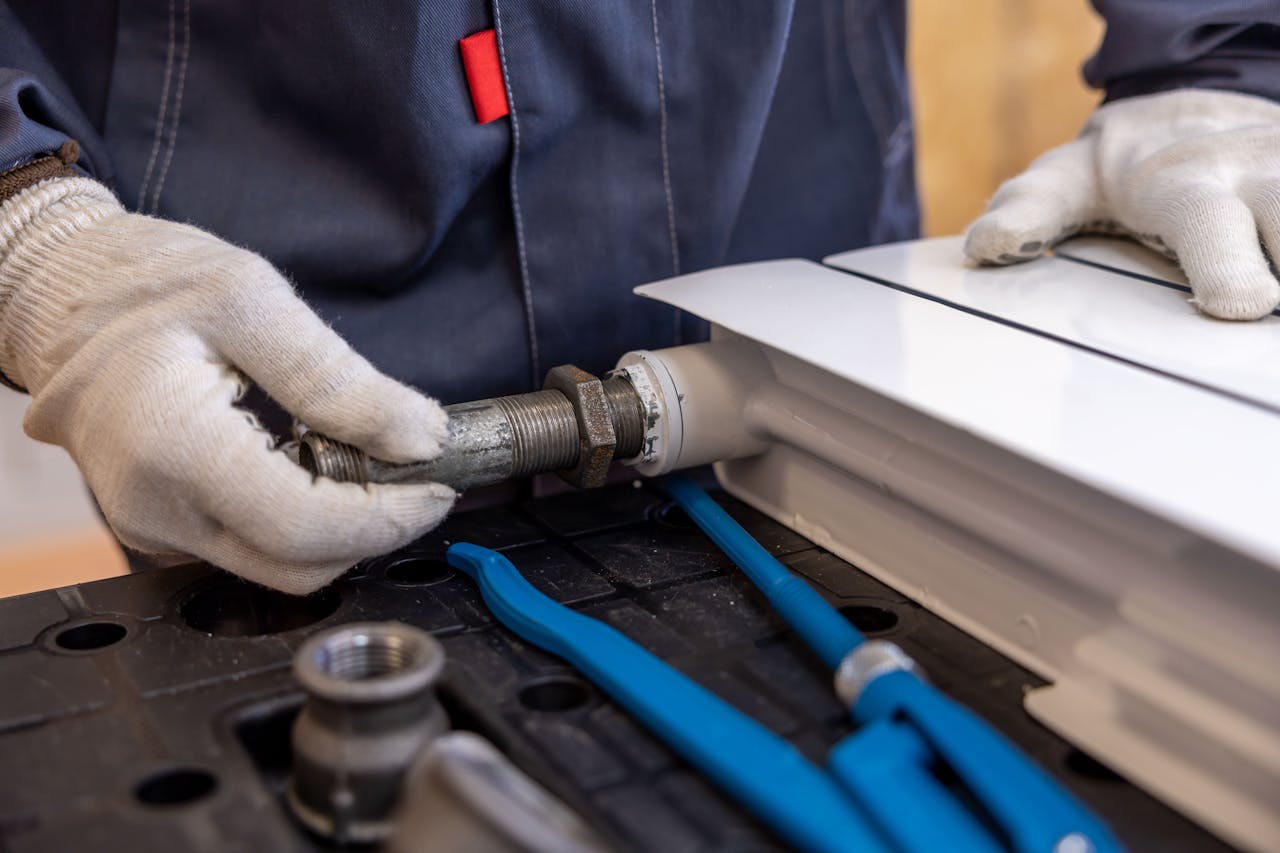 Pipe connections in Boiler RepairWhen the heat quits, we show up
How we actually run a boiler repair
We do not guess and swap parts until the heat comes back. We work the system in order so you pay for the fix, not a stack of trial parts.
We read the system first
Gas, oil, or electric. Cast iron, mod-con, or steam. Cold-fill pressure, fault codes, the age and condition of the circulators and expansion tank. Five minutes of looking saves an hour of wrong moves, and it tells us whether you are dealing with a quick fix or a boiler that is near the end of its run.
We trace the fault to one cause
No-heat calls come down to a handful of failure points: ignition and flame proving, the circulator and zone valves, the aquastat or control board, the relief valve and expansion tank, and the pressure loop. We test each in turn instead of throwing a part at it and hoping.
We tell you what it is and what it costs
Before we open a wallet for you, you hear the diagnosis in plain English, the part it needs, and the number. If the smart money says replace instead of repair, we say that too. No fluff, no upsell on something you do not need.
We fix it and prove it holds
New part in, system bled of air, pressure set, and then we cycle the boiler through a full call for heat and watch it. We do not pack up until the radiators are hot and the burner is firing clean.
Repair or replace? We will be honest
Not every boiler is worth another repair, and not every old boiler needs to be ripped out. We have both conversations all the time. Here is the rough line we draw.
Worth repairing
A boiler under fifteen years old with a single failed part, a circulator, a zone valve, a relief valve, an igniter, or a flame sensor, is almost always worth fixing. The block is fine, the heat exchanger is sound, and one part gets you years more out of it. Most of our boiler-repair calls land right here, and you are back to warm the same day.
Time to talk replacement
A cracked heat exchanger, a flooded block, repeated failures within one season, or a unit pushing twenty-plus years with rising fuel bills, those are the ones where pouring money into repairs stops making sense. We will lay out the cost of the fix against the cost of a new high-efficiency unit and let you make the call with real numbers in front of you.
The boilers we work on
Front Royal and the wider Shenandoah Valley have a real mix of heating systems, from postwar cast-iron units in town to newer condensing boilers out in the county. We are comfortable across the lineup.
- Gas boilersNatural gas and propane, standard efficiency and high-efficiency condensing (mod-con). Ignition, gas valves, condensate traps, and combustion faults.
- Oil boilersCommon in older Warren County homes off the gas main. Nozzle, electrode, pump, and aquastat work, plus the leaks that come with age.
- Electric boilersElement and contactor failures, and the wiring and control faults that leave a zone cold.
- Cast iron and steamThe heavy old systems in town. We know their quirks, their water levels, and how to keep them running without making things worse.
Why a Front Royal winter is hard on a boiler
Older homes, well water, and a real cold snap every year. That combination puts boilers under stress most of the country never sees.
The Shenandoah Valley does not get a mild winter. We get nights in the teens and single digits, and that means your boiler runs long and hard for weeks at a stretch. A part that was getting tired in October finally gives up in January, right when you need it. That is the busiest stretch of our year, and it is why we keep the truck stocked for the most common boiler failures.
A lot of the homes around Front Royal, Riverton, and out toward the county run on well water, which tends to be hard. Over the years that mineral content builds up inside the boiler and the loop, fouling heat exchangers and seizing valves. Combine hard water with an unheated basement and pipes that run cold, and you get the frozen-line and pressure problems we see every winter. We knock 10% off frozen water-line repairs because around here they are a fact of life, not a rare event.
Older housing stock plays into it too. Plenty of homes in town still run their original cast-iron boiler or a system that has been patched a few times by a few different hands. We are not afraid of those. We figure out what was done before, what is actually wrong now, and we fix it without tearing into things that were working fine.
If your heat just quit, do not wait it out and hope. A boiler losing pressure or leaking can freeze and split pipes fast in this climate. Reach out to Ajax or call us and we will get you back to warm.
What it costs, straight up
We are not going to pretend every boiler repair is the same price, because it is not. A relief valve is a small job. A failed control board on a condensing boiler is a bigger one. What we will promise is that you hear the number before we do the work, and the number is the number.
Diagnosis comes first. We find the real fault, then we give you a clear price on the part and the labor to fix it. If the honest answer is that the boiler is done and a repair would be throwing good money after bad, we tell you that and price the replacement instead. Quotes are free, and there is no charge for a straight opinion. With 45 years of combined experience and backflow certification behind us, we have seen what your boiler is doing before, and we are not learning on your dime. See the kind of work we stand behind in our project gallery.
Boiler repair questions
My boiler quit and it is freezing out. Will you come tonight?
Yes. We run emergency boiler calls 24/7 because no heat in a Front Royal winter is not a wait-until-Monday problem. Call 540-671-5417 and tell us what the boiler is doing, whether it is no heat, a leak, or a fault code, and we will get out to you. A boiler losing pressure or leaking can lead to frozen, split pipes fast in this climate, so do not sit on it.
Why does my boiler keep losing pressure?
A residential boiler should hold steady around 12 to 15 psi when cold. If the gauge keeps dropping, you have a leak somewhere, often at the relief valve, the circulator flange, the expansion tank, or a pinhole in the loop. A waterlogged expansion tank or a failing auto-feed valve can also cause it. We trace the pressure loss to its source rather than just topping up the water, because adding water without fixing the leak only buys you a few days.
Should I repair my old boiler or replace it?
It depends on the unit and the failure. A boiler under about fifteen years old with one bad part is almost always worth repairing. A cracked heat exchanger, a flooded block, repeated breakdowns in one season, or a unit past twenty years with high fuel bills are the cases where replacement usually makes more sense. We will give you the cost of both, with real numbers, and let you decide. We do not push a new boiler on someone who does not need one.
What kinds of boilers do you work on?
Gas, oil, and electric, from standard cast-iron units to high-efficiency condensing (mod-con) boilers, plus the older cast-iron and steam systems common in town. We are certified on most of the major brands and we keep parts for the common failures on the truck so a lot of repairs get done in one visit.
One zone of my house is cold but the rest is warm. Is that the boiler?
Usually it is not the boiler itself. When the rest of the house heats fine but one zone stays cold, the most common causes are a failed zone valve, a stuck or dead circulator on that loop, or air trapped in the line. Those are straightforward to diagnose and fix once we are on site. We check the zone controls and bleed the loop before assuming anything bigger is wrong.
Do you charge to come look at it?
Quotes are free, and so is an honest opinion. We diagnose the problem, then give you a clear price on the repair before we do any work. If the smart move is to replace the boiler instead of repairing it, we will tell you that and price it out too. No surprises, no charge for telling you the truth.
Pipe burst, water heater dead, or just need a straight answer?
Tell us what is going on and a real person calls you back, usually within the hour. The quote is always free.
Rather talk now? Call 540-671-5417, 24/7.