
Garbage Disposal Installation in Front Royal
A disposal is a 20 minute job when it goes right and a flooded cabinet when it goes wrong. We mount it level, seal every joint, and wire it the way the inspector wants. Father and son, 45 years between us.
Why this is more than a hardware-store swap
A disposal lives under the sink with every drain joint you have
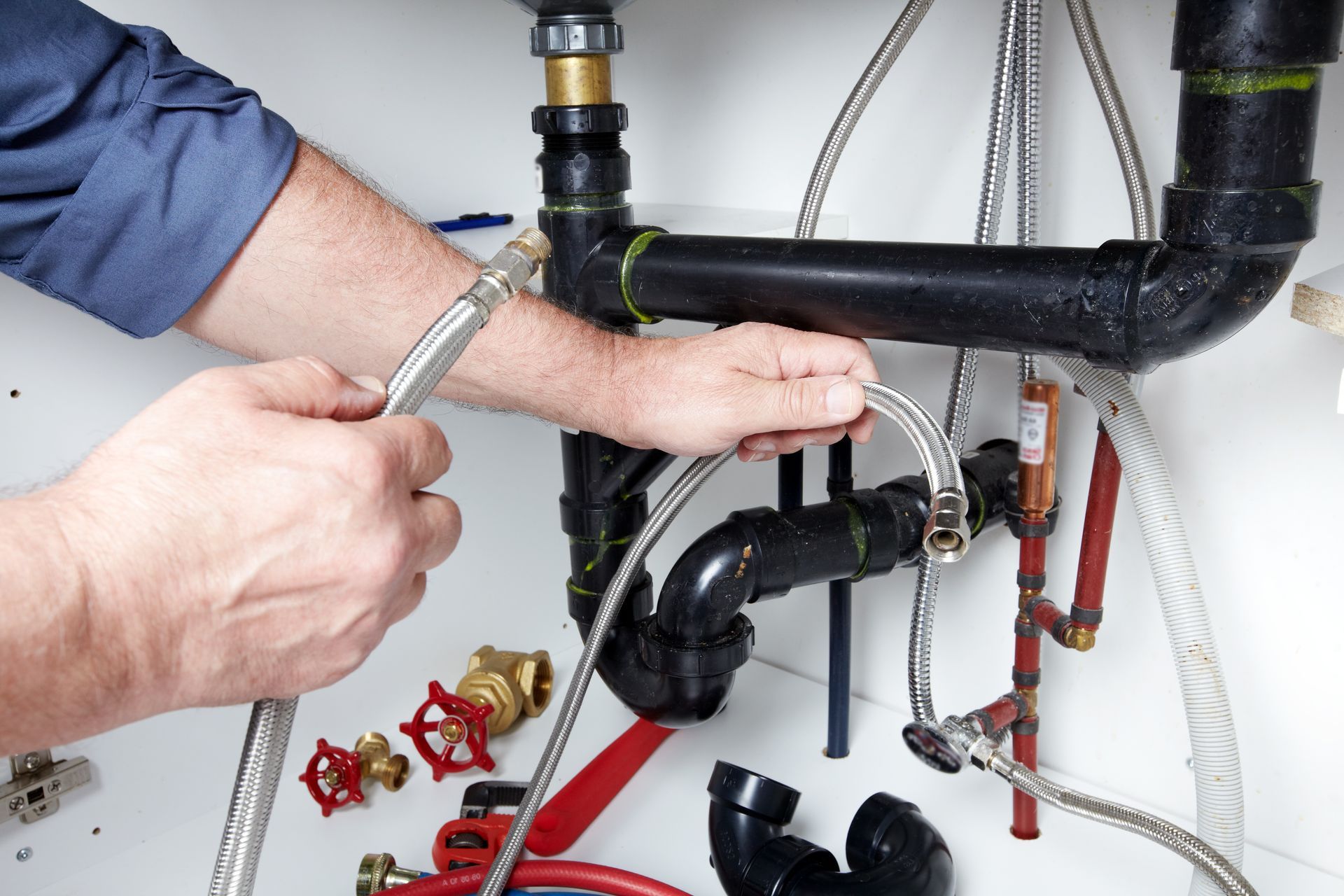
People think a garbage disposal is an appliance you bolt on and forget. Under the sink, it is part of the drain. It shares a tailpiece with the dishwasher, it ties into the P-trap, and on a lot of Front Royal kitchens it sits on top of a 45 year old continuous waste arm that was never meant to carry a 3-bolt mount and a vibrating motor. When somebody installs a disposal without touching the rest of that plumbing, you usually get a slow leak at the slip joints two weeks later, a dishwasher that backs up dirty water into the bowl, or a hum-and-no-spin unit because the splash guard was pinched on the mounting ring.
That is the difference between a clean install and a fast one. We treat the whole drain assembly as one job. We check the trap arm slope, replace tired slip washers instead of reusing them, route the dishwasher loop high so it can’t siphon, and we test under load before we pack up. When we leave, you can run the dishwasher and the disposal at the same time and watch the cabinet stay dry.
If your old unit already failed and you want it diagnosed before you replace it, that is a different visit. This page is about putting a new disposal in and doing it once. Want it looked at first? Tell us what it’s doing and we’ll point you the right way.
 On the job in Front Royal
Signs it’s time for a new disposal, not another reset
When to stop hitting the red button and call us
- It hums but won’t spin, even after the reset. The bottom red button resets the motor once or twice. If it keeps tripping, the motor windings or the bearings are going. A jam tool will free a stuck flywheel; it won’t fix a burnt motor.
- Water is dripping from the body, not the joints. A leak at a slip nut is a washer. A leak from the seam of the canister itself means the internal seal has rusted through, and that unit is done.
- It’s louder than it used to be, with a rattle. Worn lugs and a cracked grinding chamber get rough and metallic. That noise is parts coming apart inside.
- It clears slowly and smells no matter what you do. Builders’-grade 1/3 HP units bog down on anything fibrous and trap rot in the chamber. A correctly sized unit with a stainless chamber handles real cooking.
- You’re remodeling or adding a dishwasher. New countertops, a new sink, or a first dishwasher are all the right moment to put the right disposal in with the right drain layout.
How Ajax does the install
Level, sealed, wired, and tested before we leave
Every install is the same disciplined sequence whether it’s a quiet 3/4 HP unit in a remodel or a straight swap on a Saturday emergency.
We kill power at the breaker or unplug, clamp off the dishwasher branch, and lay down towels and a catch bucket. Old unit gets unmounted from the sink ring without dropping it on the trap, and the drain water gets caught instead of dumped in your cabinet.
This is the step most installers skip. We look at the tailpiece, the trap arm, and the slip joints. If the waste arm is corroded or the slope is flat, we tell you straight and replace what needs it. A new disposal on a bad drain is money wasted.
The 3-bolt or quick-lock mounting ring gets seated with fresh plumber’s putty under the flange, snugged evenly so it sits flat, and the splash guard goes on clean so it doesn’t pinch. Level matters: a tilted unit vibrates and leaks at the gasket.
If you have a dishwasher, we punch the factory knockout (the part forgotten on a third of failed installs that floods the bowl), connect the drain hose with a high loop so wash water can’t back-siphon, and clamp it tight.
The discharge tube ties into the trap with new washers, set to the right height so the trap holds a proper seal. We don’t reuse hard, flattened gaskets. Everything gets hand-tight plus the right turn, not crushed.
Hardwired units get the whip connected in the box with the correct strain relief and ground; plug-in units get the cord kit set. We follow the way Virginia wants it so it passes if a permit’s involved, and so it’s safe under a wet sink.
Power on, water running, we grind through ice and citrus, run the dishwasher at the same time, and watch every joint for a full cycle. If a slip weeps, we find it now, not after you’ve cleaned the kitchen.
Picking the unit
Replace the same size, or move up a tier
You don’t need the biggest motor on the wall at the store. You need the right one for how you cook and how many people use the sink. Here’s the honest version we’d give a neighbor.
Straight replacement
If your old unit worked fine until it died and you cook normal, a matched 1/2 HP unit drops right in, keeps the cost down, and we’re in and out fast. Good for a quiet house or a rental. We’ll tell you if the existing wiring and drain support it as-is.
Step up to 3/4 HP
Busy family kitchen, you cook real food, you’ve got a dishwasher running daily? A 3/4 HP stainless-chamber unit grinds finer, jams far less, and runs noticeably quieter. The price difference is small next to how much longer it lasts. This is what we put in most homes.
We install whatever brand and model you’ve already bought, and we’ll happily pick one up and bring it with us if you’d rather not stand in an aisle reading spec sheets. See the kind of work we turn out on our gallery.
Front Royal & the Shenandoah Valley
Older sinks, well water, and what they do to disposals here
A lot of homes around Front Royal, Riverton, and out toward Linden are older, and the kitchen plumbing under them tells the story. We see galvanized waste arms rusted thin, undersized 1/3 HP builder units bolted onto cabinets from the seventies, and sinks that were never set quite level. None of that is a reason you can’t have a good disposal. It’s just a reason a 20 minute swap sometimes needs an honest extra half hour on the drain to be done right.
Well water matters too. A good share of the county is on wells, and harder, mineral-heavy water builds scale in a disposal chamber faster than city water does. That’s part of why we lean toward stainless chambers out here, and why we tell folks to run cold water a few seconds after every use to keep the chamber flushed. Small habits, longer life.
And winter is real in the Valley. When a hard freeze cracks something downstream, you don’t want a marginal disposal install adding to the mess. We build the drain side to take the season.
We pick up the phone, we show up, and we tell you straight whether your old drain is fine or whether it’s the part that’s actually going to fail next.
What it costs & what to expect
Straight talk on pricing and the day of the install
Honest pricing posture
The quote is free, and it’s the price. A basic same-size replacement on a drain that’s in good shape is our quickest, lowest job. If we open the cabinet and find a rotted waste arm, a missing dishwasher loop, or wiring that won’t pass, we show you, explain it, and quote it before we touch anything. No surprise line items, no upsell theater. We also run a 10% discount on frozen water-line repairs through the cold months, separate from disposal work but worth knowing if winter’s already gotten you.
The day itself
Clear the cabinet out the night before if you can. A standard install runs under an hour; a swap that needs new drain parts runs a little longer. We protect the floor, haul off the old unit, clean up the slip-nut grit, and walk you through the reset button, the splash guard, and the cold-water habit before we go. Then we run it in front of you so you’ve seen it work. Need it on the calendar? Reach out here or just call.
Questions homeowners ask us
Garbage disposal install FAQs
How long does a garbage disposal installation take?
A straight replacement on a healthy drain usually runs 30 to 60 minutes. If we find a corroded waste arm, a missing dishwasher connection, or wiring that needs correcting, it takes a bit longer, but we tell you that before we start so there are no surprises.
Do you supply the disposal or do I buy it?
Either way works. We’ll install a unit you already bought, or we’ll bring the right one with us so you don’t have to read spec sheets in a store aisle. If you’re not sure what size to get, ask us first and we’ll size it to your kitchen.
What size disposal should I get for my Front Royal home?
For most households we recommend a 3/4 HP unit with a stainless grinding chamber. It jams less, runs quieter, and handles well-water scale better, which matters out here. A 1/2 HP unit is fine for a light-use kitchen or rental. We’ll give you the honest call for your situation.
Can you connect my dishwasher to the new disposal?
Yes, and we always knock out the factory dishwasher port and route the drain hose with a high loop so dirty water can’t back-siphon into your sink. A skipped knockout is one of the most common reasons a dishwasher floods the bowl after a bad install.
My old disposal hums but won’t spin. Should I just replace it?
Try the bottom reset button once. If it trips again, or if it leaks from the body of the unit rather than a joint, the motor or internal seal is failing and replacement is the right move. We can confirm it on site and swap it the same visit.
Do you offer emergency disposal service?
We’re available 24/7 for plumbing emergencies. If your disposal failed and it’s leaking into the cabinet, call 540-671-5417 and we’ll get it shut off and handled. Free quotes apply to scheduled work as well.
Pipe burst, water heater dead, or just need a straight answer?
Tell us what is going on and a real person calls you back, usually within the hour. The quote is always free.
Rather talk now? Call 540-671-5417, 24/7.