
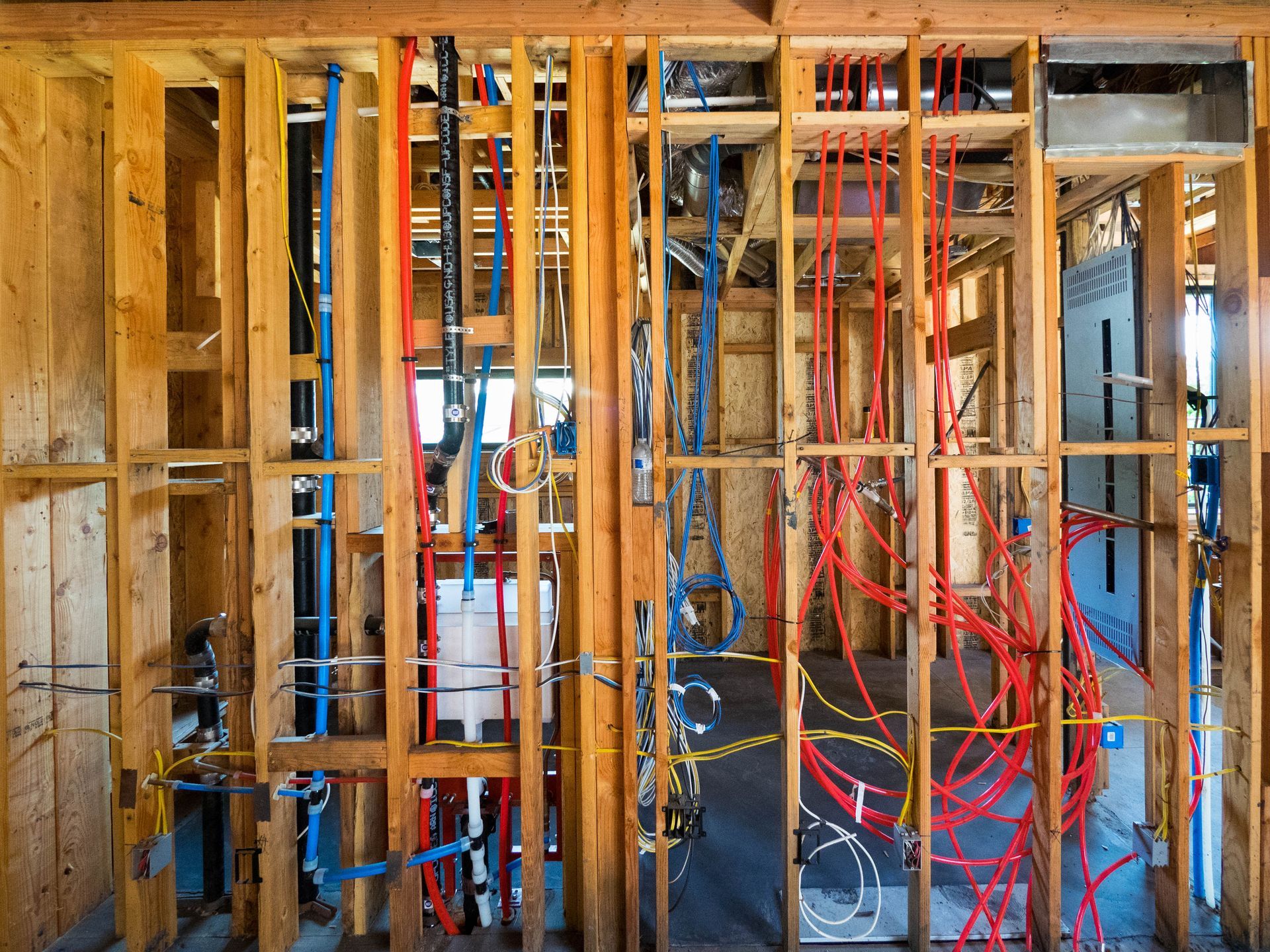
How to Keep Your Pipes from Freezing This Winter in the Shenandoah Valley
Cold snaps in the Valley find every weak spot in your plumbing. Here’s how to stay ahead of frozen pipes, and what to do if one freezes on you anyway.
Why Valley Winters Freeze Pipes
We’ve worked plumbing in this valley a long time, and the cold here is no joke. We get nights that drop into the single digits, sometimes lower out toward Strasburg and Woodstock, and a hard freeze that hangs around for two or three days is what does the real damage. One cold night usually isn’t enough. It’s the stretch where the temperature never climbs back above freezing that gets your pipes.
A lot of homes around Winchester and Front Royal are older, and the plumbing got run wherever it was easy at the time. That means water lines sitting in uninsulated crawlspaces, against exterior walls, or out in an attached garage. Those are the spots that freeze, because the pipe sits in outside air with nothing between it and the cold.
If you’re on a well, take a look at your pressure tank and the line coming in from the well too. Anything that carries water and lives in an unheated space is fair game for a freeze.
Which Pipes Freeze First, and Why
The first ones to go are always the pipes farthest from your heated living space. Crawlspace lines, garage lines, and anything running through an exterior wall. Cold air pools low and sneaks in through foundation vents and gaps, and a copper or PEX line out there has no help.
Kitchen and bathroom pipes on an outside wall are a common one too. The cabinet under the sink blocks your house heat from reaching the pipe, so it sits in a little cold pocket. People are surprised when a kitchen sink freezes inside a warm house, but that’s exactly why it happens.
The other thing folks forget is the hose bib, the outside faucet. If you left a hose connected, water stays trapped in the bib and the line behind it. That water freezes and cracks the pipe inside your wall where you can’t see it.
How to Get Ahead of It
Insulate the exposed lines. Foam pipe sleeves from the hardware store cost a few dollars and slide right over the pipe. Hit anything in the crawlspace, the garage, and along exterior walls. For the worst spots, heat tape rated for water pipes is worth the money.
On the coldest nights, let a faucet run a slow drip, the one fed by your most exposed line. Moving water is a lot harder to freeze than still water, and a little drip relieves pressure in the line. It costs you pennies compared to a burst pipe.
Open the cabinet doors under sinks on exterior walls so house heat can reach the pipes. Disconnect every garden hose and drain the bibs. And go close up your crawlspace vents for the season, or stuff them with foam blocks. Those vents earn their keep in summer and turn into a problem in January.
What To Do If a Pipe Freezes
The first sign is usually a faucet that gives you nothing, or just a trickle, when everything else in the house runs fine. That’s a frozen line somewhere upstream. There’s no need to panic over it, but don’t let it sit either.
Open the faucet on that line so water has somewhere to go once it thaws. Then warm the frozen section gently. A hair dryer, a space heater kept at a safe distance, or towels soaked in hot water wrapped around the pipe all work. Never use a torch or any open flame on a pipe. We’ve seen what that does, and it’s worse than the frozen pipe.
The Real Danger Is the Thaw
Here’s the part people get wrong. The pipe doesn’t usually flood you while it’s frozen. Ice expands and can crack the pipe, but the ice itself plugs the leak. The water shows up when it thaws and that crack opens up with full pressure behind it.
So if you’ve had a frozen pipe and you’re warming it back up, stay close and know where your main shutoff is. The second water starts flowing, watch for leaks at that spot. If you find a crack, shut the main off and call us. The faster you catch it, the less cleanup you’re dealing with.
Find your main water shutoff before you ever need it. That’s five minutes well spent for any homeowner.
When You Need Us, We’re Here
We’re a family operation out of Front Royal, father and son, with 45 years combined in this trade. My father ran the plumbing department at America’s largest plumbing company, so we’ve seen every kind of frozen and burst line the Valley can throw at a house. We’ll get you sorted fast.
All winter we run 10 percent off frozen water line repairs, and we answer the phone 24/7 for emergencies, because a burst pipe won’t wait for business hours. Quotes are free. Call us at 540-671-5417 and we’ll take care of you.
Questions about your own system? Learn more about our Residential Plumbing, see recent work, or request a free quote. Or call us straight at 540-671-5417. We pick up, we show up, and we tell you straight what is wrong.
Common questions
At what temperature do pipes start to freeze?
Pipes generally start freezing when the air around them drops to about 20 degrees and stays there. What matters isn’t the temperature inside your house, it’s the temperature where the pipe actually sits, like a crawlspace or garage. A long cold stretch is far more dangerous than one cold night, because the pipe never gets a chance to thaw out.
Should I really leave a faucet dripping all night?
On the coldest nights, yes. A slow drip on the faucet fed by your most exposed line keeps water moving, and moving water resists freezing. It also relieves pressure in the line, which matters because pressure is what bursts a pipe. The water you waste costs a tiny fraction of what a burst pipe repair runs.
My faucet stopped running but I don’t see any water. Is that bad?
That usually means you’ve got a frozen line and the ice is blocking the flow. The good news is the ice is also plugging any crack for now. Open that faucet, warm the pipe gently, and watch closely once it thaws, because that’s when a crack will start leaking. Know where your main shutoff is before you start.
Do I need to worry about pipes if I’m on a well?
You do. Your pressure tank, the line coming in from the well, and any plumbing in an unheated basement or utility room can freeze the same as municipal lines. Keep those spaces above freezing and insulate exposed pipe. Around Winchester and the surrounding county plenty of homes run on wells, and we treat that plumbing with the same care.
How much does it cost to fix a frozen or burst pipe?
It depends on where the break is and how much water got out, so we give you a free quote before any work starts. All winter we run 10 percent off frozen water line repairs. If it’s an emergency we answer 24/7, so call 540-671-5417 and we’ll come out.
Can I thaw a frozen pipe myself?
Often, yes, if you’re careful. Open the faucet on that line, then warm the frozen section with a hair dryer, a space heater at a safe distance, or hot wet towels. Never use a torch or open flame. If you find a crack or you can’t reach the frozen spot, shut your main off and call us.
Need a plumber in Winchester, VA?
Family owned, 45 years of combined experience, free quotes and 24/7 emergency service across Front Royal and the Shenandoah Valley.
540-671-5417