
The Lowest Drain In The House Tells On The Main Line
In an older Leesburg house, a main line clog rarely starts upstairs. It shows up first at the basement floor drain or the laundry line. Here is how to read the signs and what we do about them.
Water Coming Up In The Basement?
Call 540-671-5417 and tell us which drain it came out of and what was running upstairs at the time. That tells us most of what we need before the truck leaves, and the quote is free.
A lot of the homes in Leesburg’s historic district, off King Street and Loudoun Street, were built before anybody planned for indoor plumbing. The drains in them got added later, often in cast iron, and they have been carrying water for decades since. When something in that system closes up, it almost never announces itself at the kitchen sink. Water runs downhill, so the trouble surfaces at the lowest opening in the house first. In most of these places that is a basement floor drain, a utility sink or the laundry standpipe.

Why The Basement Floods Before The Bathroom
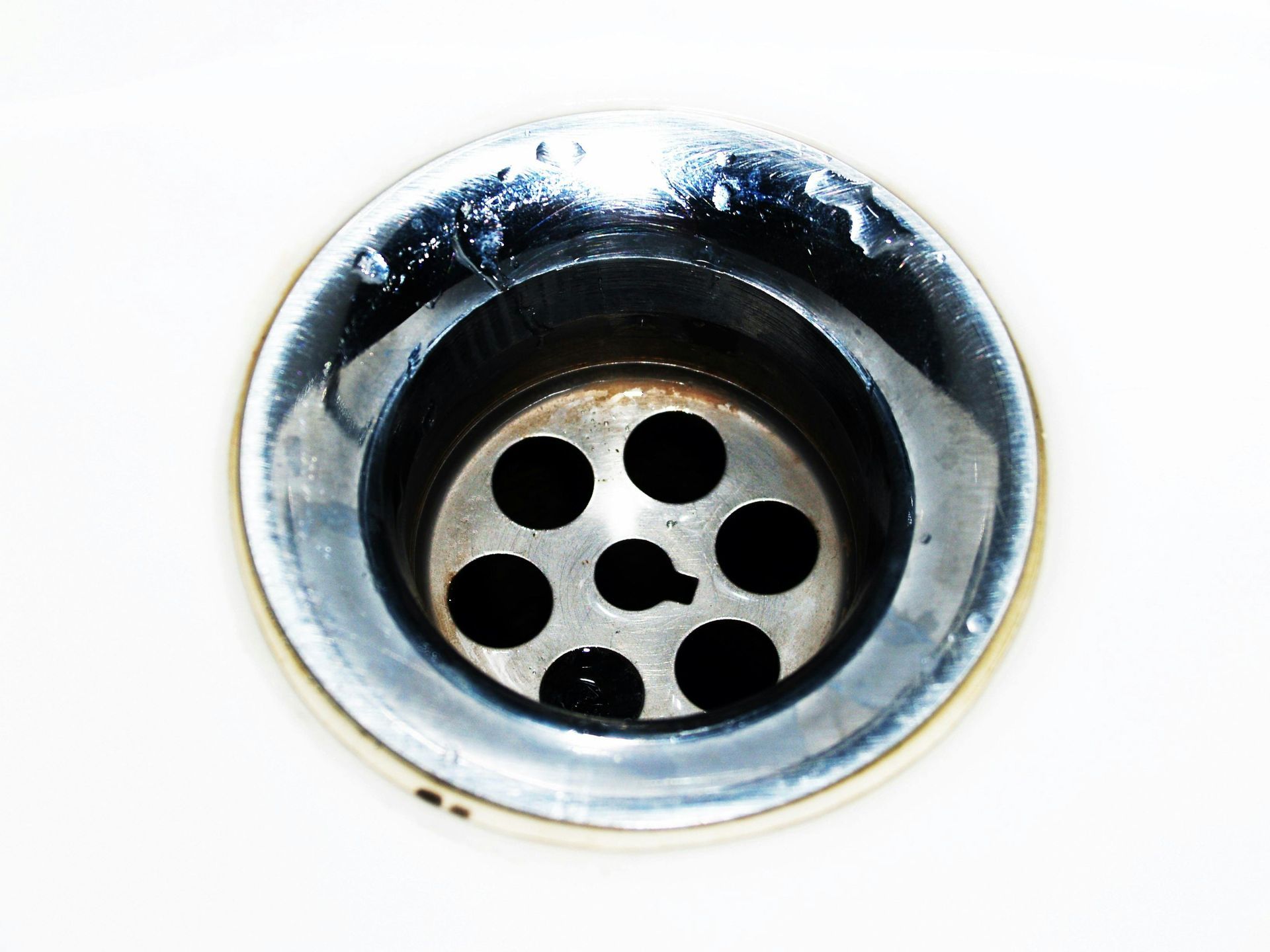
Every drain in the house eventually empties into one main line that leaves the building and heads for the street. When that main line is blocked somewhere past the last branch, the water from upstairs has nowhere to go, so it backs up and looks for the lowest way out. A shower on the second floor drains fine for the person standing in it. Two floors down, gray water rises out of the floor drain grate, or the laundry sink fills with water nobody put there.
That is why homeowners are so often caught off guard. The upstairs looks normal, the toilets flush, and the only sign is a wet spot near the water heater or a smell from a drain nobody uses. Basement floor drains also tend to sit idle for long stretches, so the first time anyone notices is after a big load of laundry or a run of showers on a Saturday morning. If the lowest drain in the house is the one acting up, treat the main line as the suspect until it proves otherwise.
Branch Clog Or Main Line? Watch Which Fixtures Act Up
A branch clog stays in its own lane. A slow bathroom sink with a perfectly good tub next to it is a sink problem, usually hair and soap in the trap or the first few feet of pipe. A kitchen drain that gurgles while nothing else does is usually grease in the kitchen line. Those are local blockages, and a cable at that one fixture is normally the right size of fix.
A main line clog involves more than one fixture, and the pattern gives it away. Flush a toilet and the tub gurgles. Run the washing machine and water comes up through the floor drain. Several drains go slow on the same day instead of one at a time. When you call, or write to us through the contact page, tell us exactly that: which fixtures, in what order, and what was running when it happened. Between the two of us we have 45 years of reading these patterns, and a good description lets us show up with the right equipment instead of guessing at the door. It also keeps you from paying to have a sink snaked when the sink was never the problem.
What Decades Of Scale Do To Cast Iron
Cast iron was a good drain material, and plenty of it in Leesburg is still doing its job. The trouble is what happens on the inside over time. The pipe corrodes slowly from the inner wall outward and builds up a rough crust of scale. A new pipe has a smooth bore that lets paper and waste slide through. A scaled pipe has ridges and pockets, and everything that passes by gives that rough wall something to grab.
So the clog you have today is usually not one thing. It is grease, paper, lint from the laundry and whatever else got caught on that wall, layered over years. Running a cable through it opens a hole, and the drain works again for a while. The scale is still there, though, and it starts catching debris the same afternoon. That is why the same basement drain backs up every few months in so many older houses. The drain got cleared each time. The pipe never did. Breaking that cycle means cleaning the wall of the pipe itself, and before we do that on an old line we want to see what shape the wall is in.
Camera First, Then Cable Or Jetter
On an old cast iron line we put a camera down before we choose a tool. Hydro jetting cleans a scaled pipe far better than a cable does, because the water scours the whole inside wall instead of punching through the middle. But jetting a pipe that is badly corroded or already cracked can open up damage that was barely holding together. The camera tells us which kind of pipe we are dealing with.
If the wall is sound, we jet it and the line comes back close to its full size. If the camera shows a heavy blockage near the cleanout and the pipe beyond it looks fine, a cable may clear it fast. If it shows a broken or separated section, no amount of clearing fixes that, and we tell you so before you pay for a cleaning that will not last. You see what we see on the screen. Our drain clearing work in Leesburg covers the full range, from a single slow tub to a main line backup at midnight. We would rather spend a few extra minutes on the camera than clear the same line three times.
What Should Never Go Down An Old Drain
Most of what we pull out of Leesburg main lines went in a little at a time. Cooking grease is the biggest one. It goes down the kitchen sink warm and liquid, then cools and sticks to the first rough surface it meets, and scaled cast iron offers plenty of rough surface. Pour grease into a can, let it set and throw it out with the trash.
After grease, the usual offenders are wipes sold as flushable, paper towels, coffee grounds, and the lint that comes off a washing machine with nothing catching it on the discharge hose. None of those break down the way toilet paper does, and in an old pipe they hang up on the scale and build. Chemical drain cleaners belong on the list too. They rarely reach a main line blockage, and the ones that do can be hard on old joints. If you are reaching for a second bottle, call us instead. And if a basement floor drain smells like sewer but never backs up, the trap may simply have dried out, which a bucket of water usually settles.
Basement Drain Questions We Get
Is water coming out of a basement floor drain an emergency?
If it is rising and the house is still using water, yes. Stop running fixtures, keep the washer off, and call 540-671-5417 at any hour. We answer the phone 24/7. A slow drain gives you time to plan. Sewer water on a basement floor does not, and it gets worse every time somebody upstairs flushes.
Why does my floor drain smell when nothing is backed up?
Usually the trap has dried out. A floor drain holds a little water in its trap to block sewer gas, and a drain that never gets used lets that water evaporate. Pour a bucket of water into it. If the smell comes back quickly, or the drain is also slow, have us take a look at it.
Do you have to dig to fix a main line clog?
Almost never for a clog. We go in through a cleanout or another opening, clear the line, and run the camera. Digging only comes up if the camera shows a broken or separated section of pipe, and in that case we show you the footage and talk through the options before anything happens.
Basement drain acting up in an older Leesburg house? Call 540-671-5417, look through finished work in the gallery, or send the details through the contact page for a free quote. Everything else we handle in town is on our Leesburg plumbing page.