
The Oldest Pipe On A Leesburg Property
Behind most older Leesburg houses, the pipe running out to the street is often the oldest plumbing on the lot, and nobody has looked inside it in decades. Here is what a camera run shows us, and when it is worth doing.
Same Drain, Third Time This Year?
Call 540-671-5417. A line that keeps coming back after it was cleared is the clearest sign a camera belongs in it. The quote is free.
The sewer lateral is the pipe that carries everything from your house to the main under the street. It is buried, it is out of sight, and on older Leesburg homes it can be older than anything else on the property, including the kitchen and the roof. Most homeowners only think about it on the day it backs up. A camera inspection lets you see the inside of that pipe without digging, so the decisions get made from footage instead of guesses. Here is what we are actually looking at on the screen.
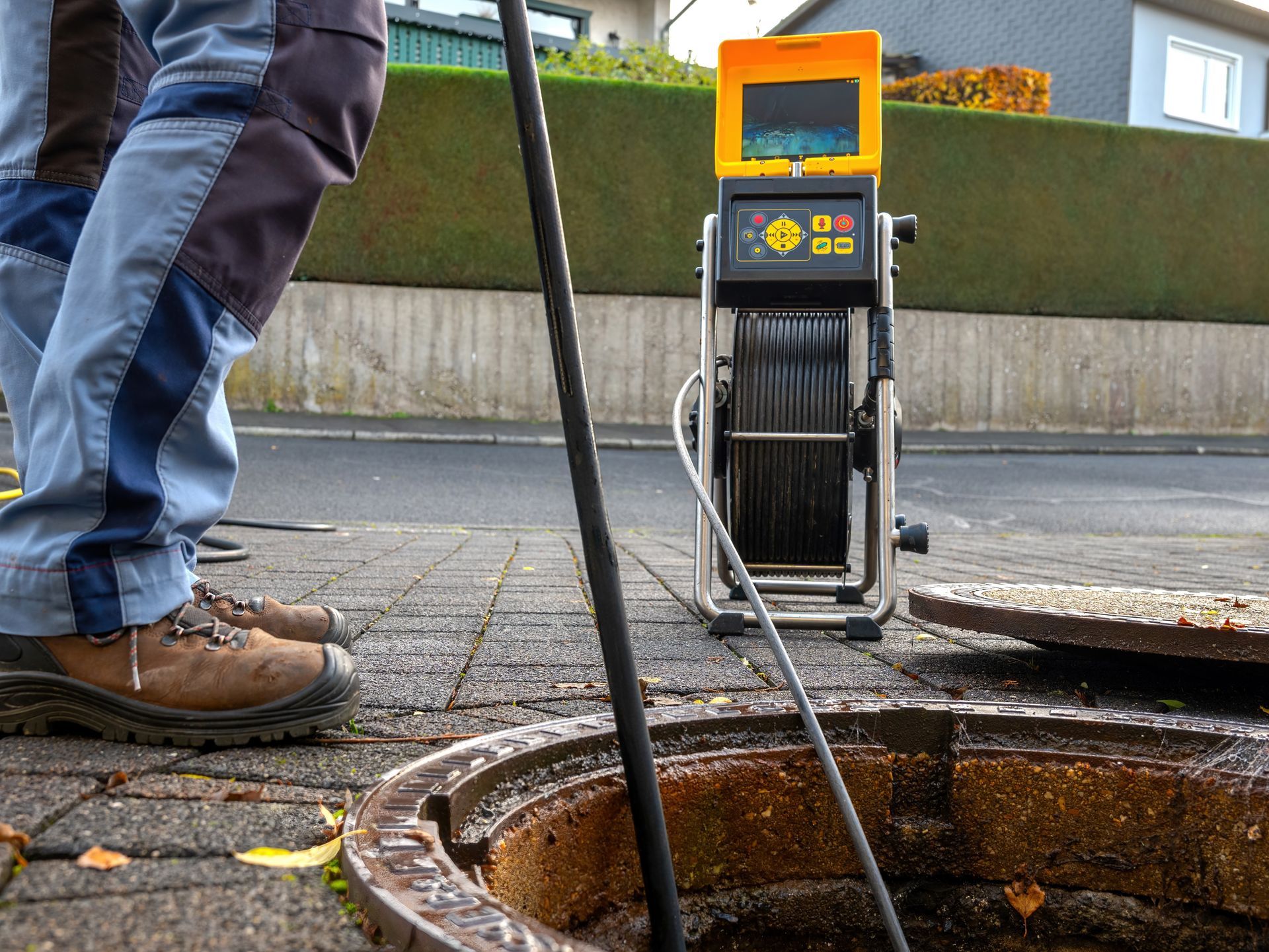
What A Camera Run Turns Up Besides Roots
Roots get most of the attention, and we gave them a post of their own. What the camera also finds, often in the same line, falls into a few other groups.
A belly is a low spot where the ground under the pipe settled and the pipe sagged with it. Water sits there instead of draining, and solids drop out in the standing water. On the monitor it looks like the camera wading into a puddle. Broken clay shows up as cracks, missing chunks of pipe wall, or a section where you can see soil through the side. Separated joints are where two lengths of pipe have pulled apart and left a gap. An offset is where the joint is still together but one section has shifted up, down or sideways, so the next length starts at a ledge that catches paper and waste. On cast iron we also see heavy scale. Most older laterals show at least one of these. The camera’s job is to tell us which one, where it sits, and how far down the line.
When A Camera Belongs In The Line
You do not need a camera every time a drain slows down. A slow bathroom sink is a bathroom sink. There are a few times we do recommend one.
The first is a drain that keeps coming back. If a main line has been cleared and backs up again within a few months, something in the pipe is causing it, and clearing it a third time only buys a few more weeks. Our rule is simple: after the second clearing, look before you clear again. The second is before a remodel that adds fixtures. A new basement bathroom or a second laundry puts more water through the same lateral, and an old line with a belly or a bad joint gives itself away fast under the extra load. Finding that before the tile goes down is far easier than after. The third is buying an older home, because a standard home inspection does not look inside the buried line at all. And if you already bought one and never had it checked, it is still worth knowing what you own.
Getting In When There Is No Outside Cleanout
A cleanout is a capped opening on the drain line, often a short pipe sticking up in the yard or a fitting in the basement, that gives us a straight shot into the lateral. Newer homes usually have one. A lot of older Leesburg homes do not, or it is buried, painted over or rusted shut.
That does not stop an inspection. With no usable cleanout, we pull a toilet and send the camera down through the floor opening, or we go in through the roof vent stack. Pulling a toilet sounds like a big deal and is not. It comes up, the camera runs, and it goes back down on a fresh wax ring. Neither route means opening a wall or digging a hole. If the house has no cleanout at all, we will usually suggest adding one while we are there, since the next person who needs into that line will get there faster. That is your call to make. It is a suggestion, and the inspection does not depend on it.
What You Walk Away With
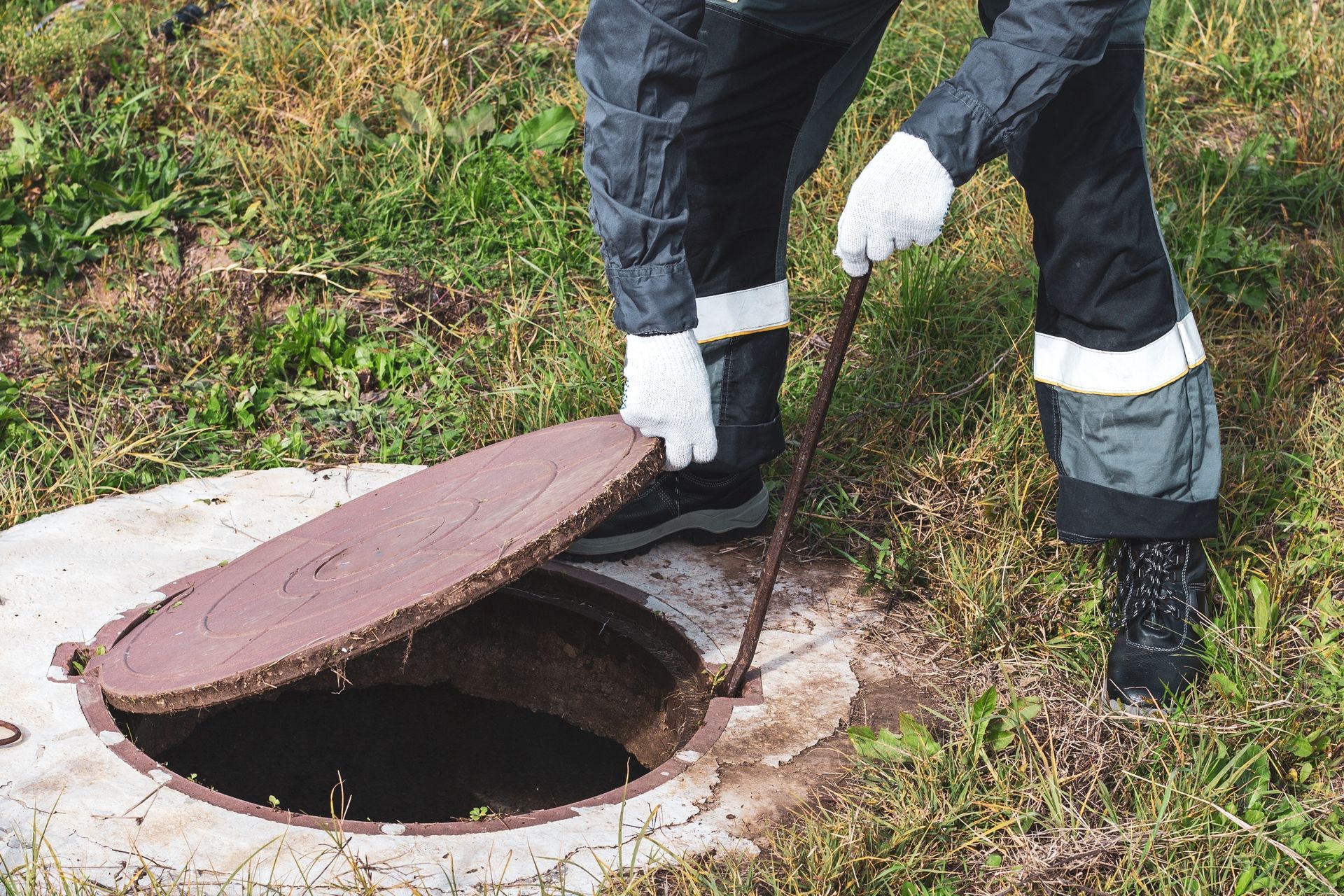
When we finish, you get footage of the run and a straight answer about what it shows. We record the video as the camera travels, and we go through it with you, stopping on anything worth a second look and telling you roughly where along the line it sits. If the line is in decent shape, we say so, and you can stop worrying about it. That is a good outcome and we do not dress it up as anything else.
If the camera finds a problem, we explain what it means in plain words. A belly holding water calls for a different fix than a cracked section, and a joint that is coming apart is a different conversation from scale that cleaned up well. We tell you which repairs are urgent and which ones can be watched for a while. Nobody digs anything until the cause is found and you have seen it with your own eyes. Our sewer inspection page for Leesburg lays out the full service, including what happens after the camera comes out.
Why We Look Before Anybody Digs
Excavating a lateral is the most disruptive thing a plumber can do to a property. It tears up a yard, sometimes a driveway or a walk, and it is the last thing you want to do on a hunch. We have seen homeowners told to replace an entire line when the camera showed one bad joint near the foundation. We have seen the reverse too, a line cleared over and over when the pipe itself had already failed.
Looking first heads off both mistakes. If the problem is one section, the repair is aimed at that section. If the line has failed along its length, you know that before you spend money cleaning it again. Either way you are paying for the fix that matches the pipe. My father ran the plumbing department at America’s largest plumbing company, and between us we have seen and done it all, so we are in no hurry to sell anybody a trench. If you want to know what is in your line, send us a note through the contact page and we will set a time.
Lateral Questions From Homeowners
How long does a sewer camera inspection take?
Most residential laterals take a couple of hours or less, from setup through going over the footage with you. If there is no exterior cleanout and we pull a toilet to get in, it runs a little longer. You are welcome to stand at the monitor while we run it, and most people find that the most useful part.
Does the camera find tree roots too?
Yes, and roots are the most common thing we find in laterals around Leesburg. They got their own post, so this one stayed with the other problems. If roots are in the line, the camera shows where they enter and how far they reach, and that tells us whether jetting will handle it or the joint needs repair.
Will you push me to repair something on the spot?
No. You get the footage and our read on it, and if repairs make sense we quote each one separately. You decide what to do and when. Plenty of the lines we inspect need nothing at all right now, and we will tell you that just as plainly as we would tell you about a broken section.
A line that keeps backing up, or a remodel on the way? Call 540-671-5417 or use the contact page for a free quote. Finished work is in the gallery, and the rest of what we do in town is on our Leesburg plumbing page.