
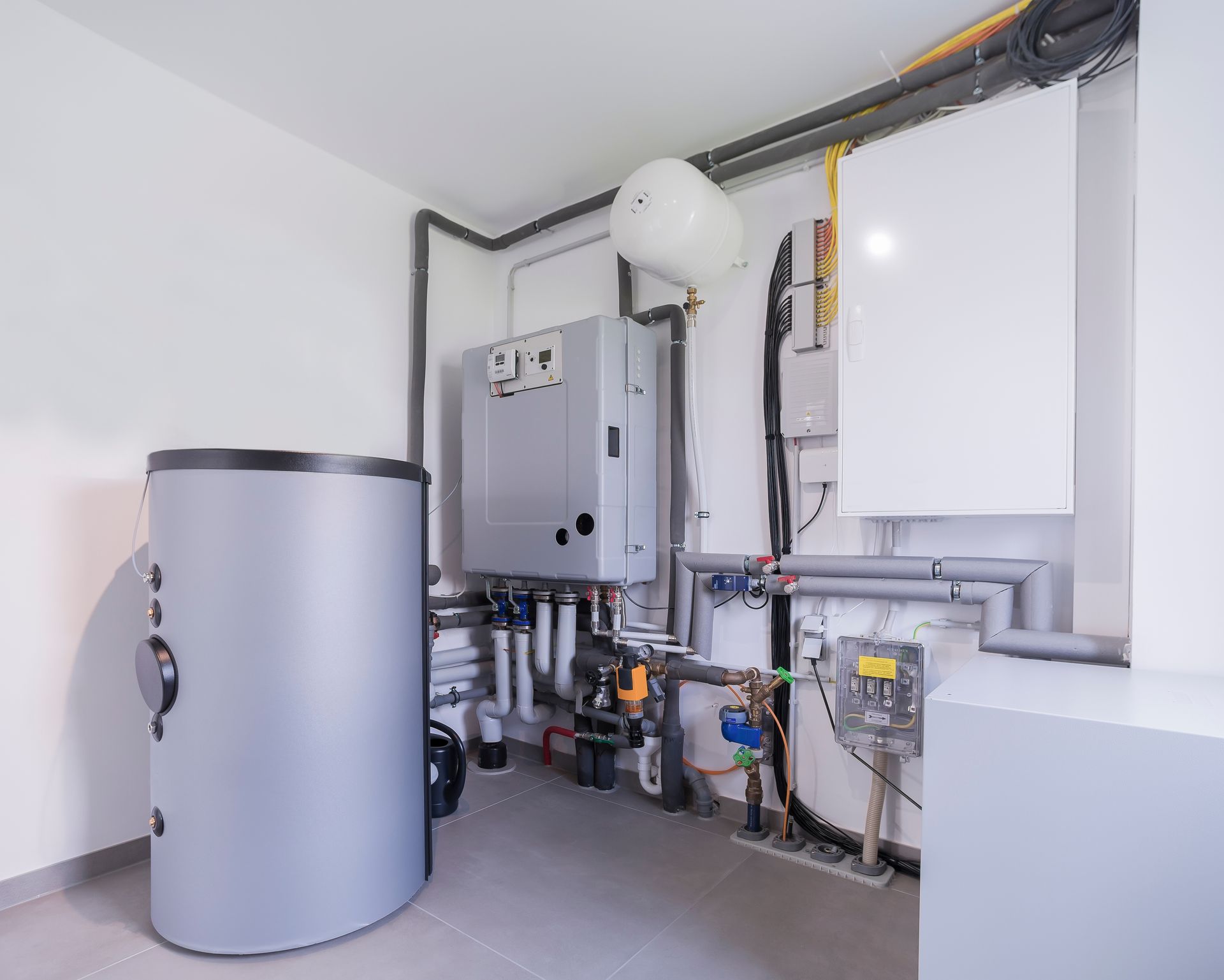
Tankless or Tank: Picking the Right Water Heater for an Older Front Royal Home
We get this question on just about every water heater call in Front Royal. Here’s the honest breakdown from a father and son crew with 45 years between us.
The short version before we get into it
Both heaters do the same job. They make hot water. The difference is how they go about it. A tank holds 40 to 50 gallons, keeps it hot, and waits for you to use it. A tankless heats water on demand as it runs through the unit, so you never store anything.
People hear endless hot water and assume tankless wins every time. In a brand new house, maybe. In an older Front Royal home it’s not that simple, and picking wrong can cost you a lot more than it should.
We install and service both. We don’t push one over the other. We tell you what fits your house and your family, and that’s the whole point of this.
What an older valley home actually throws at you
A lot of the housing stock around here is older, and that’s where tankless gets expensive fast. A tankless unit usually burns more gas than your old tank did, so the existing gas line may be too small to feed it. That means running new line.
Then there’s venting. Tankless heaters vent differently, often through the side wall instead of up the old flue, so you’re cutting and routing new vent pipe. Go electric tankless and you’re often looking at a serious panel and wiring upgrade, because those units pull a ton of amps all at once.
None of that is a dealbreaker. We do these upgrades all the time. But it’s real money on top of the unit, and an honest plumber tells you about it before you sign, not after. A tank usually drops right back into the same spot the old one came out of.
How much hot water does your house really need
This is the question that actually decides it. A tankless heats water at a set flow rate. If you’ve got a big family running two showers, the dishwasher, and the washing machine all at once on a cold morning, a single tankless can struggle to keep up with that much demand at the same time.
A good tank doesn’t care how many fixtures are open. It just hands out whatever it’s got stored. The catch comes when that 50 gallons runs out and you’re waiting on it to reheat. Big family, back to back showers, and that tank can run dry.
So it comes down to demand. A couple or a small household that rarely overlaps usage is a great tankless candidate. A full house with everybody moving at once in the morning might be better off with a properly sized tank, or in some cases two tankless units working together.
Cost, lifespan, and what you get for the money
A tank is cheaper up front and cheaper to install, especially on a straight swap. A quality tank runs 8 to 12 years, sometimes longer if you flush it and the valley water isn’t beating it up. Hard water and well sediment shorten that life, which matters out here.
Tankless costs more to buy and more to put in, but a well maintained unit can run 15 to 20 years. It frees up the floor space where a big tank used to sit, and it trims your energy use since it isn’t keeping water hot around the clock.
The math works out over time if you stay in the house long enough and your install costs were reasonable. If the gas, vent, and electrical upgrades pile up, that payback window stretches way out. We’ll run the real numbers for your house instead of a brochure average.
When tankless is worth it and when a tank is the smart call
Go tankless if you’re a smaller household, you’re tired of running out of hot water, and your home can take the unit without a small fortune in upgrades. When the conditions line up, it’s a strong long term pick.
Stick with a quality tank if you’ve got a big family with heavy overlapping demand, or if your older home would need expensive gas, vent, and electrical work to make tankless happen. The lowest install cost lives here too. There’s no shame in a good tank. We install plenty of them and they do the job for years.
Honestly, half the time the right answer is the boring one. A correctly sized, well installed tank in the right house beats a fancy tankless that’s fighting your plumbing every winter.
How we figure it out for your house
When we come look, we check your gas line size, your venting, your panel, and where the unit lives. We ask how many people, how many bathrooms, and when everybody uses hot water. Then we tell you straight what each option costs installed, not just the price of the box.
We’re backflow certified and certified for most major water heater brands. We’re licensed and insured, and the quote is free. We do frozen line repairs too, and in winter that’s 10 percent off, which matters in this valley.
Father and son, 45 years combined, and my father ran the plumbing department at America’s largest plumbing company. We’ve seen and done it all on these heaters. Call us at 540-671-5417 and we’ll get you set up with the one that actually fits.
Questions about your own system? Learn more about our Water Heaters, see recent work, or request a free quote. Or call us straight at 540-671-5417. We pick up, we show up, and we tell you straight what is wrong.
Common questions
Will a tankless water heater really never run out of hot water?
It won’t run out the way a tank does, since it heats water as it flows. But it can only heat so much at once. Open too many fixtures at the same time and the water comes out cooler, because the unit can’t keep up with all that flow. Size it right for your house and that’s rarely a problem.
Can I just swap my old tank for a tankless in my older Front Royal home?
Sometimes, but usually not as a simple swap. Tankless units often need a bigger gas line and different venting, and electric models can need a panel upgrade. In an older home those upgrades add to the cost. We check all of that during the free quote so there are no surprises.
How long does each type last around here?
A quality tank typically runs 8 to 12 years. A well maintained tankless can go 15 to 20. Our hard and well water shortens both if you skip maintenance, so flushing the unit makes a real difference on lifespan in the valley.
Which one is cheaper?
A tank is cheaper to buy and cheaper to install, especially as a direct replacement. Tankless costs more up front and more to put in, though it uses less energy and lasts longer. Whether tankless pays off depends on your install costs and how long you stay in the house.
My family is big and we always run out of hot water. What should I get?
A big household with lots of overlapping showers and laundry is a case where a single tankless can struggle. A properly sized tank, or a pair of tankless units working together, usually serves you better. We’ll size it to your actual demand instead of guessing.
Do you service both kinds, or just install new ones?
Both. We install and repair tanks and tankless units, and we’re certified for most major brands. We also handle frozen line repairs in winter at 10 percent off. Call 540-671-5417 anytime. We run 24/7 emergency service.
Need a plumber in Front Royal, VA?
Family owned, 45 years of combined experience, free quotes and 24/7 emergency service across Front Royal and the Shenandoah Valley.
540-671-5417